Below is a list of some projects I am currently leading. If you are interested in any of them, would like to contribute or collaborate, then please reach out at w.heffernan@vu.nl
Enhanced mobilization of organic matter in a
warming tundra (EMOM)
This project aims to assess how warming and permafrost thaw will affect the lability of laterally transported organic matter in polygonal tundra ecosystems. Increased hydrological connectivity, exposure of previously frozen material to microbial decomposition, and increased vegetation inputs due to ice wedge degradation will have important implications for biogeochemical cycling in tundra ecosystems and the magnitude of their feedback to climate warming. This project aims to determine if laterally transported organic matter is vulnerable to enhanced decomposition. This project is in collaboration with researchers from the Swedish University of Agricultural Sciences (SLU). This project is supported by the INTERACT Transnational Access program (2022).

Particles as hotspots for enzyme activity along the terrestrial-freshwater continuum
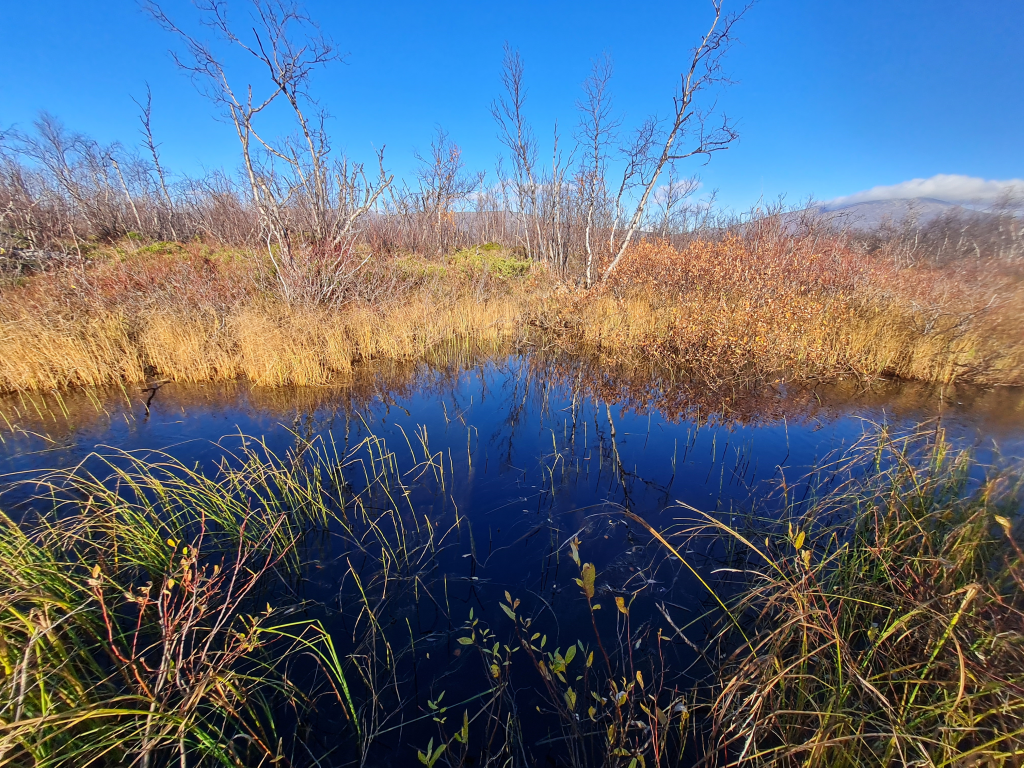
This project aims to assess the importance of particle formation for microbial colonization and enzyme production along the terrestrial-inland water continuum in Sweden, with a particular focus on the lake Ånnsjön region. In this project we compare rates of particle formation, microbial colonization, enzyme activity and kinetics, and associated respiration rates in waters collected along the terrestrial-inland water continuum, as it moves from the surrounding organic rich landscape, into first and second order streams, and eventually into lakes. This project is supported by the Olsson-Borgh grant (2021; SEK 300,000)
Stability of Peatlands Under Disturbance Scenarios (SPUDS)
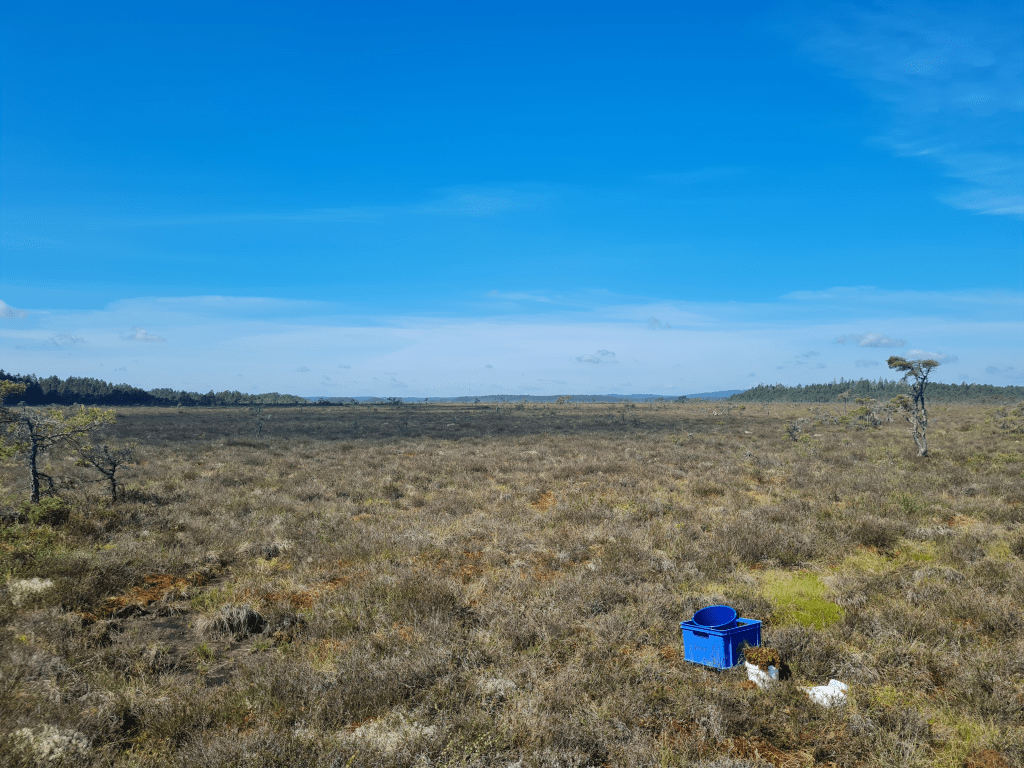
This project aims to develop a better understanding of microbial and ecosystem resilience in peatlands to both increased growing and non-growing season disturbances. We aim to determine whether peatland resilience at sites where growing season disturbance (fire) has occurred is more vulnerable to increased non-growing season (FTCs) disturbances. In this project we will determine how peatland microbial community structure and activity are affected following fire, and assess if peatland microbial communities and soil carbon stores found in fire affected sites are less resilient to increased FTCs. This project is in collaboration with researchers from the University of Plymouth, Swedish University of Agricultural Sciences (SLU), University of Liverpool, and Radbound University. This project is supported by the Videfelts grant (2021; SEK 300,000)

The vulnerability of organic matter to enhanced enzymatic degradation under warming scenarios in terrestrial and freshwater tundra ecosystems (Tundzyme)
This project aims to increase our understanding of how shifting environmental conditions will impact the enzymatic degradation of organic matter in tundra ecosystems. We are assessing how warming winter soil temperatures, through the use of snow fences, are influencing the enzymatic degradation of organic matter in tundra soils and if the organic material exported from these warmer soils is more vulnerable to enhanced enzymatic degradation and mineralization upon export to the aquatic network. We are investigating this potential vulnerability to enhanced degradation in soils and upon export to the aquatic network under varying tundra vegetation types (heath and meadow) across multiple tundra snow fence experimental sites from Svalbard, Scandinavia, Greenland, and Alaska. This project is in collaboration with researchers from the Arctic University of Norway, Swedish University of Agricultural Sciences (SLU), and University of Copenhagen. This project is supported by the Ymer-80 grant (2021; SEK 30,000).
The lability of permafrost peat to decomposition following thermokarst formation
This project is focused on identifying underlying mechanisms explaining discrepancies in the rates of anaerobic decomposition and emissions of greenhouse gases (CH4) from permafrost ecosystems following aquatic (thermokarst pond) and terrestrial (thermokarst bog) thermokarst formation. This project will compare the kinetic and thermodynamic constraints on organic matter decomposition following thermokarst formation and addresses the importance of environmental constraints for the enzymatic degradation of organic matter when molecular constraints are removed in anoxic, terrestrial, and aquatic sediments following permafrost thaw. This project is in collaboration with researchers from Stockholm University and the Swedish University of Agricultural Sciences (SLU). This project is supported by the Jänes grant (2021; SEK 20,000)


Constraints on the enzymatic degradation of peat
In this project we address the multiple proposed mechanisms of what constrains peat enzyme activity by manipulating the biochemical controls associated with the inhibition and stimulation of enzyme activity. These biochemical constraints are regulated by abiotic (redox conditions and temperature) and biotic (organic matter source) factors. Following the termination of a 90-day incubation we determined the enzyme kinetics and temperature sensitivity for multiple abiotic and biotic treatments. We are currently preparing this manuscript for publication. This work was presented in the “Peatlands Under Pressure” session at the EGU General Assembly 2022, https://doi.org/10.5194/egusphere-egu22-2844.
 liamheffernanresearch.com